
Three Books Worth Reading When Your Parent Is in Hospice

Sometimes there are things you need during a hospice journey that conversation can't always provide. Questions in the back of your mind that you can’t quite figure out how to articulate. Fears that poke at you in the middle of the night, but that you feel uncomfortable bringing up to a friend or family member right now. Obviously Google is always there, but sometimes you want something that is more than a black and white clinical answer. Sometimes you just want to read about the experiences of people who have been in your shoes.
These three books come up again and again when hospice workers, social workers, and families talk about what actually helped. Each of these 3 recommendations is unique. Hopefully you’ll find at least one of them to be helpful. Your hospice nurse, social worker, spiritual care coordinator, or even the leader of the Caregiver Support Group can also make recommendations if none of these feel like quite the right fit.
Final Gifts by Maggie Callanan and Patricia Kelley
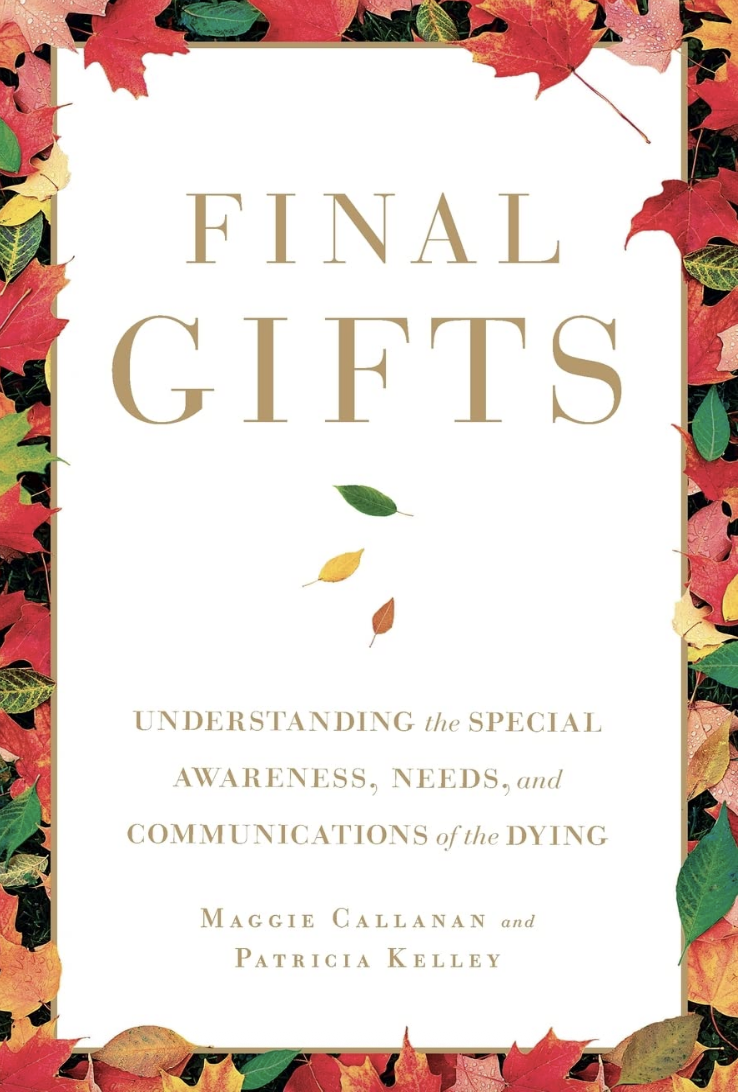
Maggie Callanan and Patricia Kelley were hospice nurses who spent years at bedsides, and this book is the result of that time. It focuses on something most families aren't prepared for: the things dying people say and do in their final weeks and days that can seem strange or confusing from the outside.
The vivid conversations with people who aren't there. The urgent sense of needing to go somewhere. The symbolic language that doesn't follow ordinary logic. Callanan and Kelley call this Nearing Death Awareness, and they explain it with warmth and clarity that takes something frightening and makes it something families can understand and even welcome.
If your loved one has been saying things that don't make sense to you, or if you want to feel more prepared for what the final days may look like, this is the book to read. It is not clinical or heavy. It is, somehow, a comforting book about dying, which is a harder thing to write than it sounds.
Being Mortal by Atul Gawande
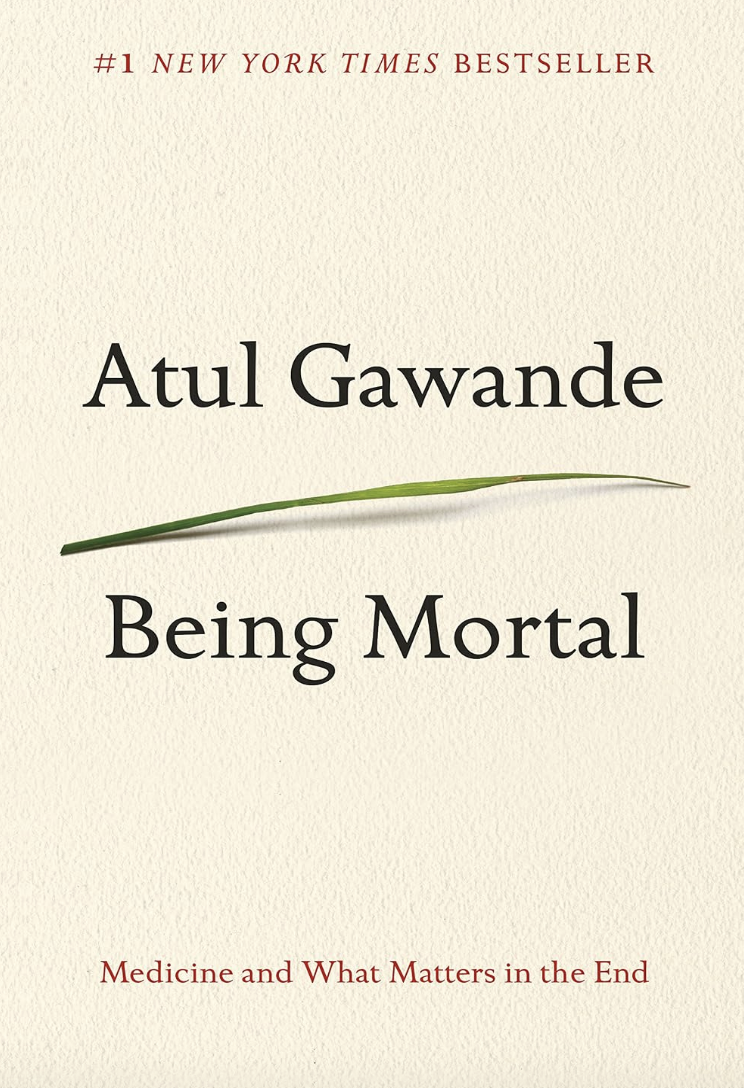
Atul Gawande is a surgeon who wrote this book after watching his own father decline and die, and after realizing that his medical training had given him almost nothing useful for that experience. Being Mortal addresses end-of-life care and contains Gawande's reflections and personal stories, suggesting that medical care should focus on well-being rather than survival.
What makes this book useful for families in hospice is that it helps you understand the system you're inside of, why doctors so often push for more treatment, why the conversation about quality of life versus length of life is so hard to have, and what it looks like when that conversation goes well. It gives you language and a framework for decisions that may still be ahead of you.
It is also an honest book about what matters at the end of a life, written by someone who had to learn that lesson the same way most of us do. Families who have read it often say it helped them feel less alone in the specific grief of watching medicine reach its limits.
The Four Things That Matter Most by Ira Byock
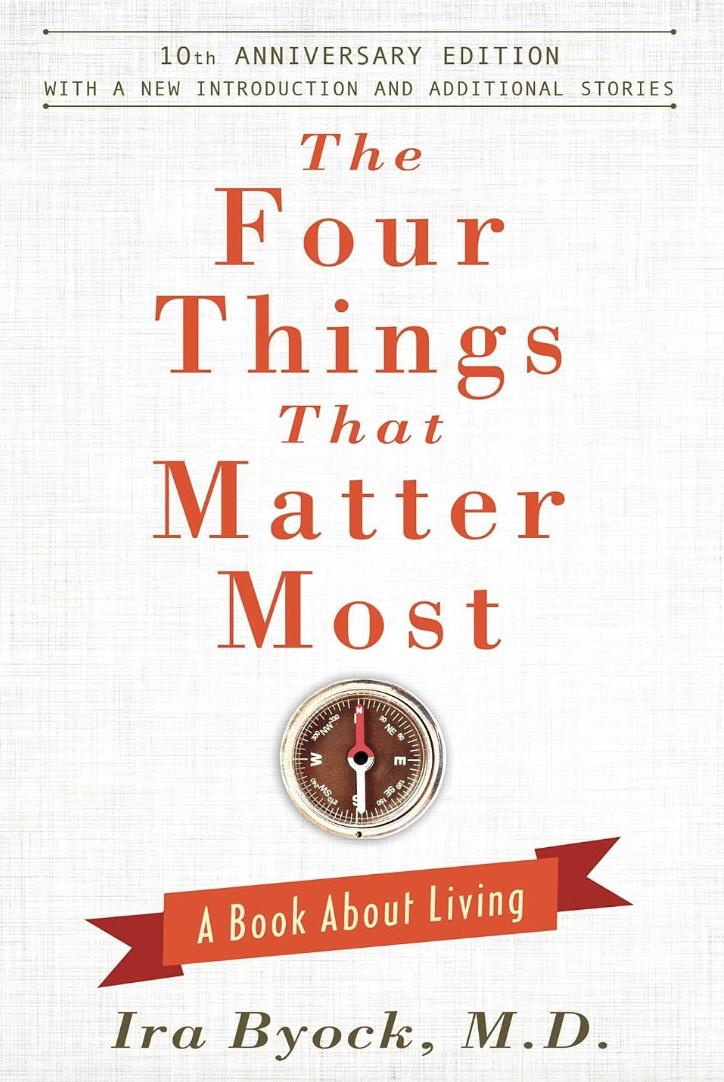
Ira Byock is a doctor who has spent his career in end-of-life care, and this book is built around a simple idea: that four phrases carry more power at the end of life than almost anything else. Please forgive me. I forgive you. Thank you. I love you.
These four phrases and the sentiments they convey provide a path to emotional wellbeing, guiding people through interpersonal difficulties to life with integrity and grace. Byock uses stories from his own practice to show what happens when people find the courage to say these things, and what is lost when they don't.
For adult children in hospice, this book is useful in a very practical way. It gives you something to do with the time you have left. Not a project or a plan, but a set of conversations that can bring real resolution even in a short window. Many families who have read it describe sitting with their parent and finally saying the things they had been carrying for years.
It is a short book. You can read it in a few sittings. And it may change what the remaining time looks like.
A note on how to read during a hospice journey
If you're caring for someone right now, you may not have the focus for long stretches of reading. All three of these books can be read in pieces. A chapter at a time, late at night, or in the quiet stretches of a day when your loved one is resting. You can also get an audiobook version if that works better for you.
Your local library almost certainly has all three, and most libraries now offer digital borrowing through apps like Libby, which means you can start reading tonight without going anywhere.
You don't have to read all of them. Start with the one that sounds most like what you need right now.