
February Whale Watching for Hospice Patients
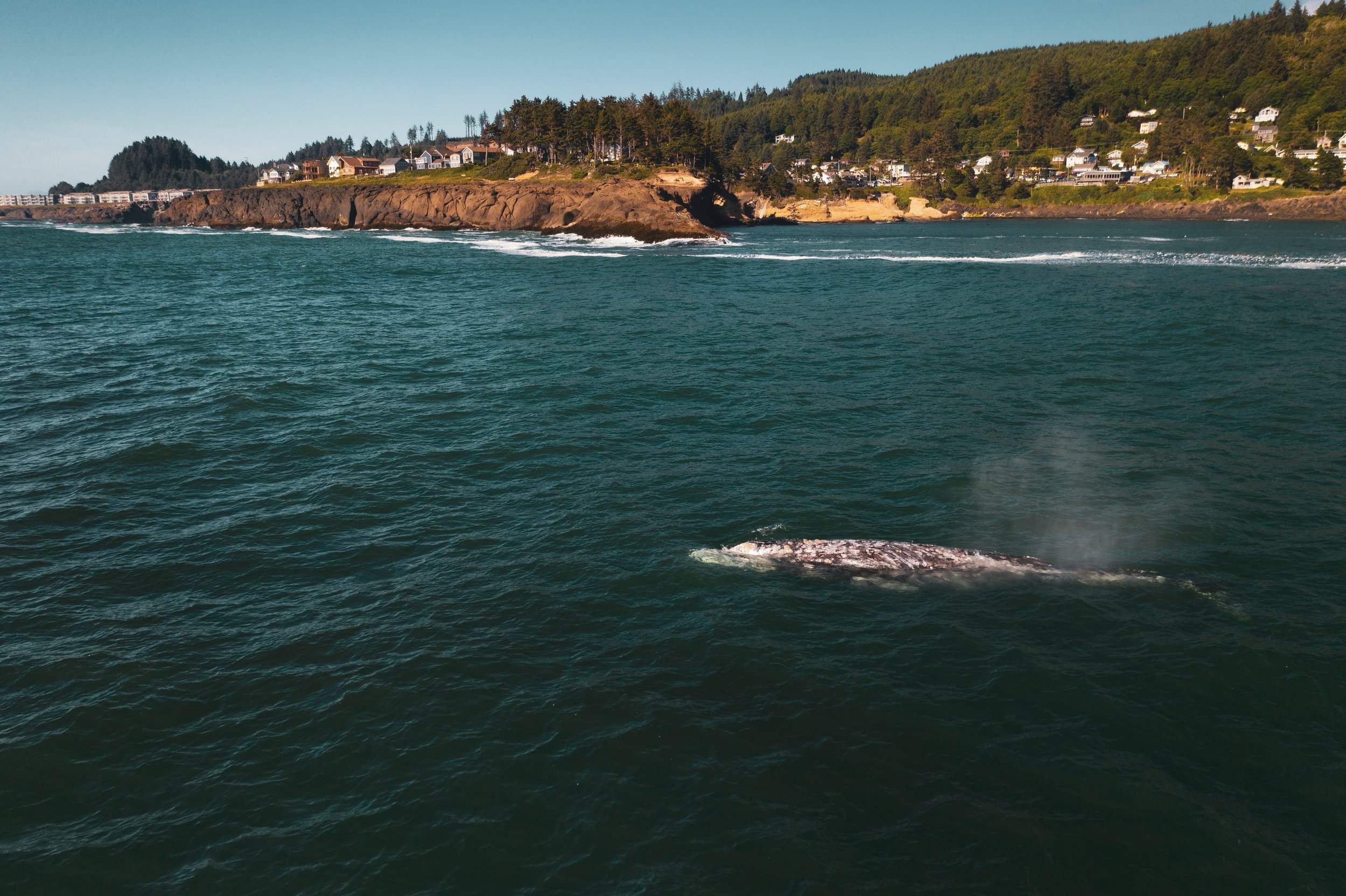
Every February, gray whales pass Crescent City on their journey north from Mexican breeding lagoons to Alaskan feeding grounds. These massive animals travel close to shore, sometimes within a few hundred yards of land. You don't need a boat or special equipment to see them. Just a good viewpoint and patience.
Whale watching offers something rare for hospice patients. It gets you outside without demanding physical exertion. You sit or stand in one spot and wait for the ocean to reveal its wonders. The activity adapts perfectly to limited energy and mobility.
More than that, watching for whales creates quiet togetherness. You and your family face the same direction, scanning the same water, hoping for the same moment. When a whale surfaces, everyone sees it together. That shared experience matters more than you might expect during hospice care.
Why Whales Pass Crescent City
Gray whales follow the coastline during migration. They stay in relatively shallow water, feeding on small creatures stirred up from the ocean floor. This route brings them past Crescent City's rocky headlands and beaches.
The northern migration happens from February through May, with peak numbers passing in March. But late February brings plenty of whales, often mothers with calves born in the warm lagoons of Baja California. These mothers swim slowly with their young, making them easier to spot than whales traveling at full speed.
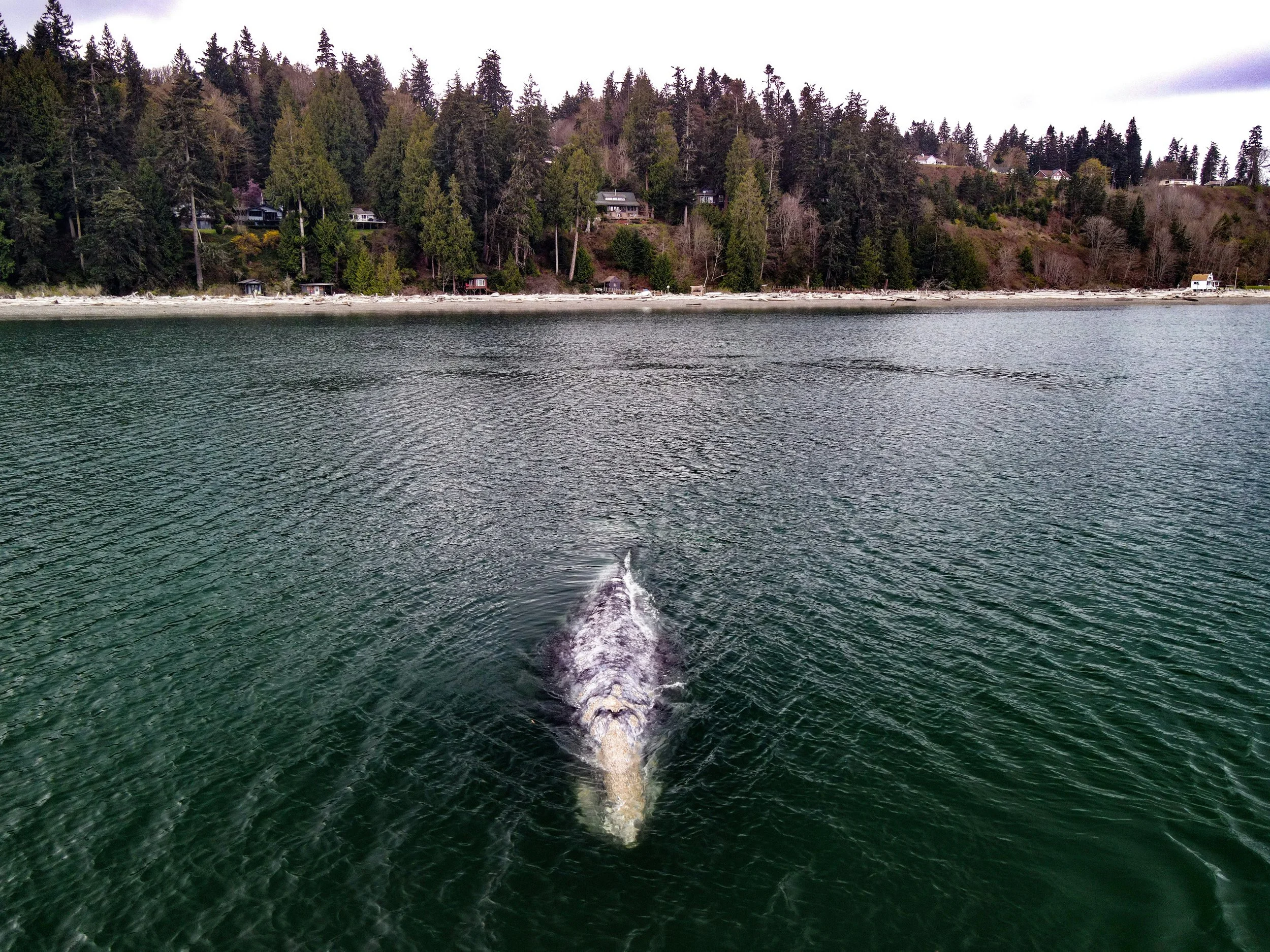
A gray whale can reach 40 to 50 feet long and weigh 30 to 40 tons. Despite their size, they're surprisingly hard to see until you know what to look for. They're gray, they blend with the water, and most of their body stays underwater. But once you spot your first whale, your eyes adjust and subsequent sightings come easier.
Whale Watching Is A Great Activity for Hospice Patients
The ocean demands nothing from you. You don't have to perform or participate actively. You just watch and wait. This passive quality makes whale watching ideal when energy is precious.
The rhythm soothes. Waves roll in steadily. Seabirds cry and circle. The horizon stretches endless. This constancy provides comfort when so much else feels uncertain. The ocean was here before you and will remain after. That perspective can feel either humbling or reassuring, depending on the day.
Watching for whales focuses attention outward. You scan the water. You notice patterns in the waves. You distinguish whitecaps from whale spouts. Your mind engages with something beyond symptoms and treatments and the small world of hospice care.
Success brings genuine joy. When you spot a whale, excitement rises naturally. Your heart lifts. You point and call out to your family. For a moment, illness disappears and you're simply a person watching something magnificent. These moments of pure wonder matter enormously.
Even unsuccessful whale watching succeeds in its own way. You spent time outside breathing salt air. You sat with family in comfortable silence. You watched the ocean and sky. These experiences hold value whether whales appear or not.
What to Look For
Gray whales don't leap dramatically like humpbacks. They surface, breathe, and dive quietly. Learning what to watch for increases your chances of spotting them.
Look for the blow first. When a whale surfaces to breathe, it exhales forcefully through blowholes on top of its head. This creates a visible spout of mist that can reach 10 to 15 feet high. On calm days you can see spouts from a mile away. The spout appears as a quick puff of white mist, then disappears.
Watch for the back rolling through the surface. After blowing, the whale's broad gray back arcs above water as it prepares to dive. This rolling motion shows the whale's enormous size. Sometimes you'll see barnacles or lighter patches on the skin.
The tail flukes sometimes lift clear of the water before a deep dive. Not every dive includes this "fluking up" behavior, but when it happens it's unmistakable. The wide, notched tail rises, drips water, and then slips beneath the surface.
Scan systematically rather than staring at one spot. Let your eyes move slowly along the horizon from left to right, then back again. Whales can surface anywhere. Patient, methodical scanning works better than hoping to get lucky staring at one area.
Watch for disturbances in the water. Sometimes you'll notice unusual ripples or swirls before you see the whale itself. Diving whales leave distinctive footprints on the surface, circular smooth spots where their tails pushed water.
Look for multiple blows in sequence. Whales typically surface several times in a row, breathing three to five times before diving deep for several minutes. If you see one blow, keep watching that area. The whale will likely surface again nearby.
Best Viewing Spots in Crescent City
Several locations around Crescent City offer excellent whale watching for people with limited mobility.
Battery Point Lighthouse sits on a small island accessible at low tide via a walkway. The viewpoint from the parking area on the mainland provides outstanding whale watching without requiring the walk across. You can park close and watch from your car if getting out feels too difficult. The elevated position gives you clear views up and down the coast.
Pebble Beach Drive runs along the coast south of downtown. Multiple pullouts let you stop and scan the ocean. The road sits close to sea level, putting you nearly eye level with the water. Some patients find this perspective easier than looking down from high bluffs. You can drive slowly, stop at any pullout that appeals, and stay as long as energy allows.
Point St. George offers dramatic coastal views from clifftop pullouts. The elevation here helps you see farther out to sea. Several spots have parking right at the viewpoint, eliminating walking. The exposed location can be windy, so bring blankets and warm layers.
Crescent Beach Overlook provides a sheltered spot with parking adjacent to viewing areas. The curved bay creates calmer water that sometimes attracts whales feeding close to shore. Benches let you sit comfortably while watching.
Preston Island Viewpoint sits just north of town with easy parking and clear ocean views. The rocky offshore islands provide reference points that help you gauge distances and spot whales moving between landmarks.
All these locations allow you to stay in or very near your vehicle if walking is difficult. Your family can set up a comfortable spot with blankets and pillows right at the car. You get ocean views and whale watching potential without exhausting yourself.
Best Supplies for Older Patients
The right equipment makes whale watching more comfortable and successful.
Binoculars help tremendously but choose them carefully. Heavy binoculars tire arms quickly. Look for lightweight models, ideally under one pound. Compact 8x32 or 8x25 binoculars work well. The first number indicates magnification. Eight power brings whales close enough without making the image shake too much from hand tremor.
Image stabilized binoculars cost more but solve the shaking problem. They use internal gyroscopes to steady the view. This technology helps patients whose hands shake from medication, fatigue, or simply age. If budget allows, these binoculars transform the experience.
A pillow or cushion for the car seat prevents soreness during extended watching. Even 30 minutes sitting in one position can cause discomfort. A good lumbar support pillow makes a significant difference.
Blankets are essential even on days that seem mild. Ocean wind chills you faster than you expect. Bring more blankets than you think you'll need. Fleece or wool blankets provide warmth without weight.
A thermos of hot tea, coffee, or soup keeps you warm from the inside. Sipping something hot makes cold air more bearable. The ritual of sharing warm drinks also creates nice moments between watching for whales.
Sunglasses reduce glare off the water. Even on overcast February days, reflected light from the ocean tires eyes quickly. Polarized lenses work best, cutting through surface glare and sometimes letting you see slightly below the surface.
A hat with a brim shades your eyes and keeps sun or rain off your face. Baseball caps work fine, but bucket style hats provide more coverage.
Hand warmers, the disposable kind you shake to activate, slip into pockets or gloves. These small heat packs counter the chill that settles into fingers and hands during long sits watching the ocean.
A simple notebook lets you record sightings. Writing down when and where you saw whales creates a record of the day. Some patients enjoy this documentation. It gives the outing more purpose and provides something to look back on later.
Making the Trip Comfortable
Check tide tables before heading out. Low tide exposes more rocky areas where whales sometimes feed. It also makes certain viewpoints more accessible.
Choose midday for warmth. February mornings and evenings get quite cold along the coast. Temperatures peak between noon and 2pm, making these hours most comfortable for patients sensitive to cold.
Plan for short trips initially. Even if you feel strong when leaving home, fatigue can hit suddenly. A 30 minute whale watching session succeeds better than an exhausting two hour ordeal. You can always come back another day.
Bring all necessary medical supplies and medications. Oxygen if you use it. Pain medications. Anything you might need during the outing. Don't assume you'll rush home if needed.
Have a backup plan for bathroom access. Most viewpoints lack facilities. Know where the nearest restroom is before you settle in to watch. Some families bring a portable urinal for male patients, acknowledging the reality that bathroom needs don't pause for whale watching.
Accept that you might not see whales. Some days the whales simply aren't there or aren't surfacing where you can see them. The outing still provides ocean time, fresh air, and togetherness. Adjust expectations to avoid disappointment.
Going Today
Late February offers excellent whale watching conditions in Crescent City. The migration is underway. The weather, while often overcast and cool, rarely prevents viewing.
Choose a viewpoint. Gather your supplies. Bring your family. Drive to the coast and park where you can see the ocean.
Then watch. Be patient. Scan the water. Notice the birds and the waves and the way light plays on the surface. Wait for the whales to reveal themselves.
Whether you see one whale or twenty or none, you spent time at the ocean. You breathed salt air. You sat with people you love watching for something magnificent. That's time well spent regardless of what surfaces from the deep.