
When the Person Dying Is Your Spouse
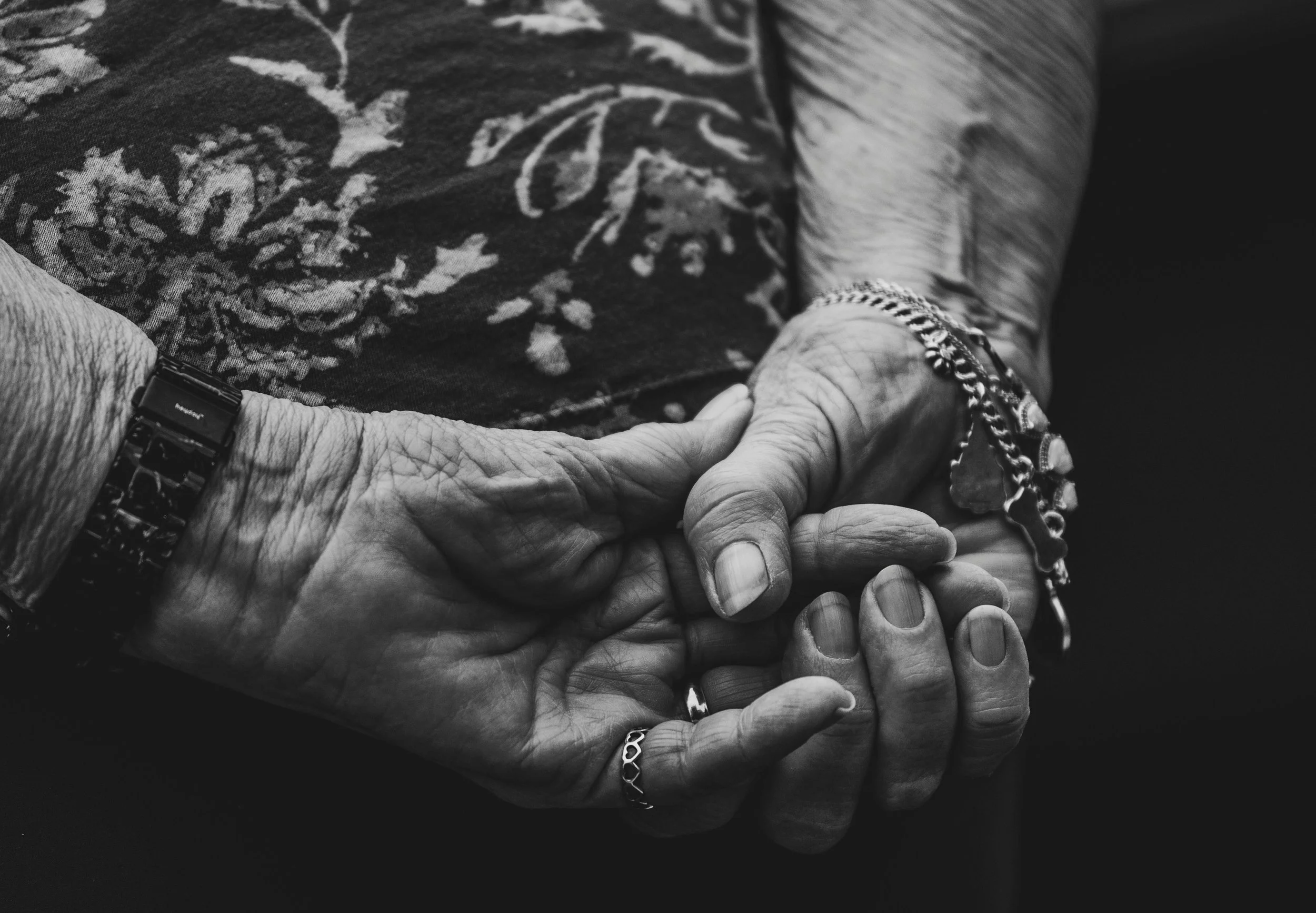
There is a particular kind of loss that doesn't get talked about enough in hospice circles. Not the loss of a parent, which is painful and expected in the natural order of things, but the loss of the person you built your life with. The one whose side of the bed you have slept beside for decades. The one who knows the story of your life because they were in most of it.
Losing a spouse to a terminal illness is its own terrain. It looks like grief from the outside, and it is, but it is also something more specific and more disorienting than that word fully captures. If this is where you are, this post is written for you.
The practical reality is different
When an adult child cares for a dying parent, there is usually a life waiting outside that caregiving role. A home of their own, a spouse, children, a job, a sense of self that exists separately from the person they are caring for. Hard as it is, there is somewhere to return to.
When you are caring for a dying spouse, that separation doesn't exist in the same way. The person you are losing is also your housemate, your financial partner, the one you talked to at the end of every day. The caregiving and the loss are woven into every corner of your daily life in a way that is hard to explain to someone who hasn't lived it.
Simple things become weighted. Cooking for one when you've cooked for two for thirty years. Sleeping in a bed that still smells like them. Making decisions you would normally make together, about the house, the finances, the care plan itself, now alone. The practical losses pile up alongside the emotional ones, and they do it in your own home, in your own kitchen, in the middle of the life you built together.
You are losing your witness
There is a quiet way that long marriages work that doesn't get named often enough. Your spouse has been the person who remembered things with you. The trip you took in your thirties. The hard year when the money ran out. The way your kids looked on their first day of school. They are the keeper of a shared history that no one else holds in quite the same way.
When they die, some of that history becomes harder to hold. You will remember it, but you will remember it alone, without the person who can say "yes, that's how it was." That particular loss, the loss of your witness, is one of the loneliest parts of losing a spouse and one of the least talked about.
It is real, and it deserves to be grieved.
The isolation is specific
Adult children who lose a parent are often surrounded by siblings, spouses of their own, friends who have been through something similar. There is a community of shared experience to move through it with.
Spousal loss, especially when it comes relatively early or when your social world was built largely around your life as a couple, can feel profoundly isolating. Friends who are still part of intact couples may not know what to say or how to include you. The social structures of your daily life were built for two, and now they aren't.
This isolation tends to be worst during the hospice period itself, when you are deep in caregiving and have little energy for anything outside the house. But it continues after, and it is worth knowing it is coming so you can think ahead about where your support will come from.
Your hospice team's social worker and counselor are there for you as much as for your loved one. Please use them. If you haven't yet connected with other people in similar situations, ask about grief support and spousal loss groups in your area. The particular relief of being in a room with people who are living the same thing is hard to overstate.
Anticipatory grief hits differently
Anticipatory grief, the grief that comes before the death, while your loved one is still here but leaving, is part of every hospice experience. But for a spouse, it carries layers that are worth naming.
You are grieving the person. You are also grieving the future you expected to have together. The retirement you planned. The grandchildren you were going to watch grow up side by side. The version of your own old age that included them. None of those futures are coming now, and grieving them while still in the middle of caregiving, while still needing to be present and functional and strong, is an enormous amount to carry.
You may find yourself grieving your own future self, the person you would have been with them still beside you. That grief is real and it is valid and it does not mean you have given up on the person who is still here. It means you love them and you are already feeling what their absence will mean.
You are still a person, not just a caregiver
One of the quiet dangers of spousal caregiving is the way it can consume your sense of self entirely. Your days are organized around their needs. Your social life has contracted. The things that used to define you outside of your marriage have fallen away, one by one, as the caregiving demands have grown.
This matters to name because after the death comes, you will need to find your way back to yourself. And that is easier, not easy, but easier, if you have kept some thread of yourself intact during the caregiving period.
That doesn't mean leaving. It means the fifteen minutes outside in the morning before the day starts. The phone call with a friend that isn't about the illness. The thing you do just for yourself, however small, that reminds you that you exist as a person outside of this role.
You are allowed to still be a person. In fact, your loved one almost certainly wants that for you.
What comes after
Grief after losing a spouse is long and nonlinear and full of moments that catch you off guard months or years later. It doesn't follow a schedule and it doesn't respond well to being rushed.
What helps, for most people, is not going through it alone. A grief counselor who has experience with spousal loss. A support group of people in the same situation. Friends who are willing to stay present not just in the weeks after the death but in the quieter months that follow, when the casseroles have stopped coming and the loss has settled into the shape of ordinary daily life.
Your hospice team's support doesn't end when your spouse dies. Bereavement support is part of what hospice provides, and you are entitled to lean on it. We also offer Grief Support Groups in several cities that we invite you to participate in. Click here to learn more.
You spent a long time building a life with this person. Losing them is one of the hardest things a human being goes through. Give yourself the full weight of that, and give yourself the support you deserve to carry it.